Yoga Center Retreats: Types, Costs, and How to Choose

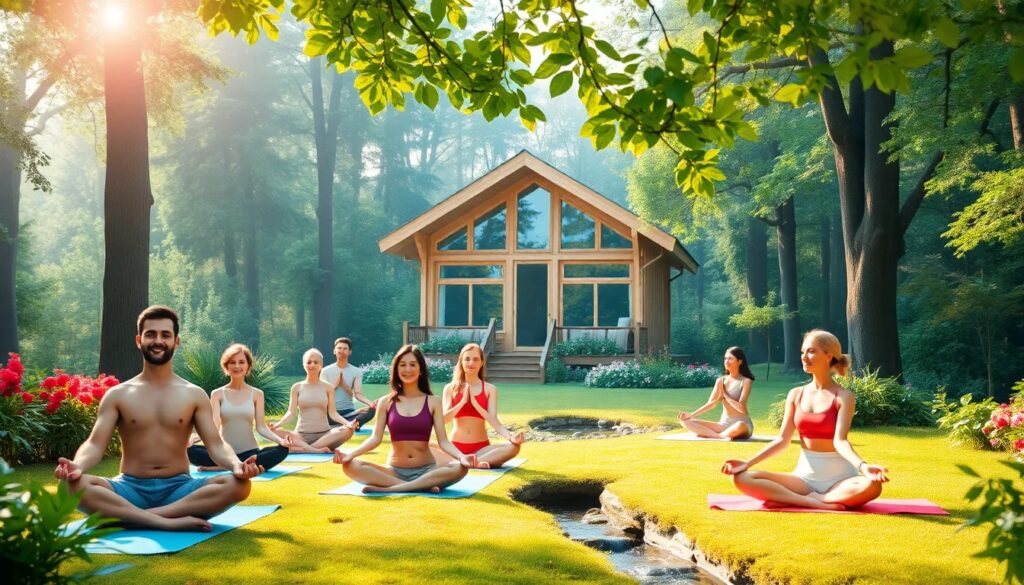
A yoga center retreat is a residential stay at a dedicated yoga or wellness center where the daily structure is built around practice — typically two sessions a day, included meals, and unscheduled time to rest, walk, or do nothing. The center handles the program. You show up, follow the rhythm, and leave the cooking, planning, and notifications at home. That is the main reason people go: a few consecutive days of guided practice plus a genuine break from the daily inputs that fragment attention.
- What a yoga center retreat actually is
- Types of yoga center retreats, compared
- How a center retreat differs from a yoga resort or an independent retreat
- What a typical day looks like
- What yoga center retreats deliver — and what they don't
- How to choose the right yoga center retreat
- Red flags and green flags when choosing a center
- What to pack
- Are yoga center retreats suitable for beginners?
- Where in the world to go
- Frequently asked questions
What a yoga center retreat actually is
The phrase gets used loosely, so it helps to define it tightly. A yoga center retreat is run out of a permanent campus — a place whose primary business is hosting retreats and trainings most of the year, not a hotel that has added a yoga class. That difference shapes everything else: the practice hall is built for practice (often two a day), the food is planned for the program (usually vegetarian-leaning, often buffet), and the schedule is published hour by hour so guests know what they are committing to.
Three features separate a center retreat from the alternatives most travelers confuse it with:
- Programmed structure. The center sets the daily rhythm; you do not assemble it from drop-in classes.
- Dedicated campus. Quiet, often rural, with on-site lodging, dining, and practice space — not a city studio with a hotel next door.
- Built-in community. The same small group practices and eats together for the duration, which is the part most guests name as the unexpected benefit.
Types of yoga center retreats, compared
| Format | Length | Cost band | Best for |
|---|---|---|---|
| Weekend reset | 2–3 days | Entry-level | First retreat, limited vacation time |
| Week-long immersion | 5–7 days | Mid-range | Real disconnection, deepening practice |
| Ashram / residential center | Flexible, days to weeks | Bundled per night | Budget, structure, study, solo travelers |
| Luxury wellness retreat | 4–7 days | Premium | Comfort, spa add-ons, couples |
| Themed retreat (women's, silent, detox) | 3–7 days | Varies | Specific intentions and communities |
Two of the long-established dedicated centers in the United States are Kripalu Center for Yoga and Health in the Massachusetts Berkshires and Omega Institute in Rhinebeck, New York — both run programs most of the year. Beach and warm-weather options also run year-round in the South; see our regional guide to yoga retreats in Florida. For coastal settings, the yoga beach retreat format is a popular variant of the same idea.
How a center retreat differs from a yoga resort or an independent retreat
The terms get used interchangeably, and the boundaries blur, but the trade-offs are real:
- Yoga center retreat — programmed, residential, set on a dedicated campus. Schedule is published, meals are included, teachers belong to the center. Best for a real break and a deepened practice.
- Yoga resort — à la carte, optional classes, full hotel infrastructure, more social life. Best for travelers who want a wellness-flavored vacation with flexibility.
- Independent retreat (hosted by a single teacher or studio) — small group, one-off date and venue, often thematically focused. Best for an intensive, specific result (e.g. yoga teacher training retreats or a themed immersion).
If you want a quiet week in a structured setting with a community, a center retreat is the right format. If you want poolside with optional morning yoga, a resort fits. If you want a focused week with a specific teacher, an independent retreat is usually the move.
What a typical day looks like
- Early morning: optional meditation or pranayama, often before sunrise at traditional centers.
- Morning practice: the day's main asana class, usually energizing — hatha or vinyasa style.
- Breakfast and free time: meals are typically vegetarian-leaning buffets; mornings off are for hikes, journaling, or rest.
- Afternoon workshop: philosophy, breathwork, anatomy, or a themed session, depending on the program.
- Evening practice: slower and quieter — commonly yin or restorative yoga — followed by dinner and sometimes kirtan or a talk.
Phones are rarely banned outside silent retreats, but most centers cultivate low-screen norms, and most guests find that to be half the benefit.
What yoga center retreats deliver — and what they don't
The realistic benefits: a few consecutive days of practice usually leave students more mobile and more aware of their body than weekly classes manage in months. The break from cooking, planning, and notifications gives the nervous system room to settle. Practicing alongside the same small group for days builds a kind of motivation that often outlasts the retreat.
What a retreat will not do: transform your life in a week, fix a chronic condition, or substitute for therapy. Reputable centers are clear about this, and wariness is warranted with any retreat that promises dramatic healing outcomes. If you are dealing with a health issue, talk to your doctor before booking a physically demanding program.
How to choose the right yoga center retreat
- Decide what you need most: rest, practice depth, community, or solitude. Each points to a different format — restorative-focused programs for rest, immersions for depth, themed retreats for community, ashram stays for solitude on a budget.
- Check the actual daily schedule. Hour by hour. An overpacked schedule defeats the purpose; an empty one may disappoint if you came to learn.
- Verify the teachers: training level and experience. A lead teacher with advanced certification (for context, see our guide to 300-hour yoga teacher training) and years of retreat experience is a good sign.
- Match the style and level honestly. A beginner at an advanced Ashtanga immersion will not enjoy it, and vice versa.
- Read recent independent reviews from multiple sources, and confirm what is included: meals, lodging, transfers, taxes, props, workshops. Ashram-style centers like the Sivananda ashram yoga retreat model bundle almost everything into the per-night rate; luxury centers itemize more.
- Check the cancellation policy before paying a deposit.
Red flags and green flags when choosing a center
A short list to scan before you book:
- Green flags: a published daily schedule, named teachers with listed credentials, a transparent cancellation policy, a medical intake form, and a clear code of conduct. Recent independent reviews across more than one platform.
- Red flags: vague "healing" or "transformation" claims with no specifics, no teacher names on the website, no published cancellation terms, no schedule beyond "morning and evening practice", and aggressive upsells on extras that are normally included elsewhere.
What to pack
- Comfortable practice clothes for two sessions a day (more changes than you think)
- Your own mat if you prefer it — centers provide mats and props, but familiarity helps
- Layers: practice halls run cool in the morning and warm by afternoon
- Walking shoes, a water bottle, and a journal
- Earplugs if you booked shared accommodation — the budget option at ashram-style centers
If you are traveling to the retreat, a lighter, packable mat makes the trip easier. A simple block-and-strap set covers most props you might want your own copy of.
As an Amazon Associate, we earn from qualifying purchases.


- YOGA BLOCK and YOGA STRAP COMBO: Makes for a great yoga prop and accessories starter kit, providing the support you need to get started
- STABILITY and BALANCE: Yoga blocks and yoga straps provide the stability and balance needed in your practice to help with optimal alignment, deeper poses and increased strength
- EXTEND with DEEPEN STRETCHES: Blocks and straps enable you to extend, support and deepen your stretches while also working to increase range of motion; Easy release D ring metal buckle holds 6 feet strap securely in place allowing your shoulders to relax
- MODIFY and ALIGN: Use under your hands, feet or seat (meditation) to ensure the proper alignment needed in order to safely support and modify poses to suit your level of flexibility; If you feel tight, don't risk injury and grab a block and a strap
- CARE INFO: Spot clean with mild detergent; towel or air dry (Block Dimensions: 9 inches W x 6 inches H x 4 inches D / Weight: 4.6 ounces; Strap Dimensions: 6 feet)

Are yoga center retreats suitable for beginners?
Yes, if the program is labeled all-levels or beginner-friendly. Gentle, hatha, and restorative-focused programs are the easiest entry points. Avoid advanced immersions, Ashtanga intensives, or anything that assumes a daily practice for your first retreat. Email the center before booking — the good ones answer honestly, and the answer itself tells you a lot about whether the program is a good fit.
Where in the world to go
There is no single "best" place — the right location depends on the experience you want. For a structured residential week in the U.S., the long-established centers in the Berkshires and the Hudson Valley (Kripalu, Omega) are reliable defaults. Beach and warm-weather formats are a year-round option; see our regional guides to yoga retreats in California and yoga retreats in Florida. For international programs with strong residential traditions, yoga retreats in Europe cover the main range from silent centers in Spain to ashram-style stays in Germany and Italy.
Frequently asked questions
A retreat is a structured residential program at a center — scheduled practices, included meals, and a cohesive group — while a yoga vacation is a trip you assemble yourself around drop-in classes. Retreats deliver deeper immersion; vacations offer more freedom.
Yes, if you choose one labeled all levels or beginner-friendly. Gentle, hatha, and restorative-focused programs are the easiest entry points. Avoid advanced immersions or intensives for a first retreat, and email the center if you are unsure — good ones answer honestly.
Costs vary widely by format, length, and location. Weekend programs are the most affordable, week-long immersions sit in the mid range, and luxury retreats are premium. Ashram-style centers are typically the budget route because room and board are bundled in.
Absolutely — a large share of retreat guests travel solo, and the structured group format makes it one of the easiest ways to travel alone. Shared rooms lower costs and build connection; private rooms are available at most centers for solitude.
No. Retreats at reputable centers offer modifications for every body, and props are everywhere. Choose a gentle or all-levels program, inform the center of any injuries or conditions in advance, and consult your doctor first if you have health concerns about a physically active program.
Have a correction or a question about this article? Reach us via our contact page.
Last update 2026-09-10. Price and product availability may change.
Recommended: